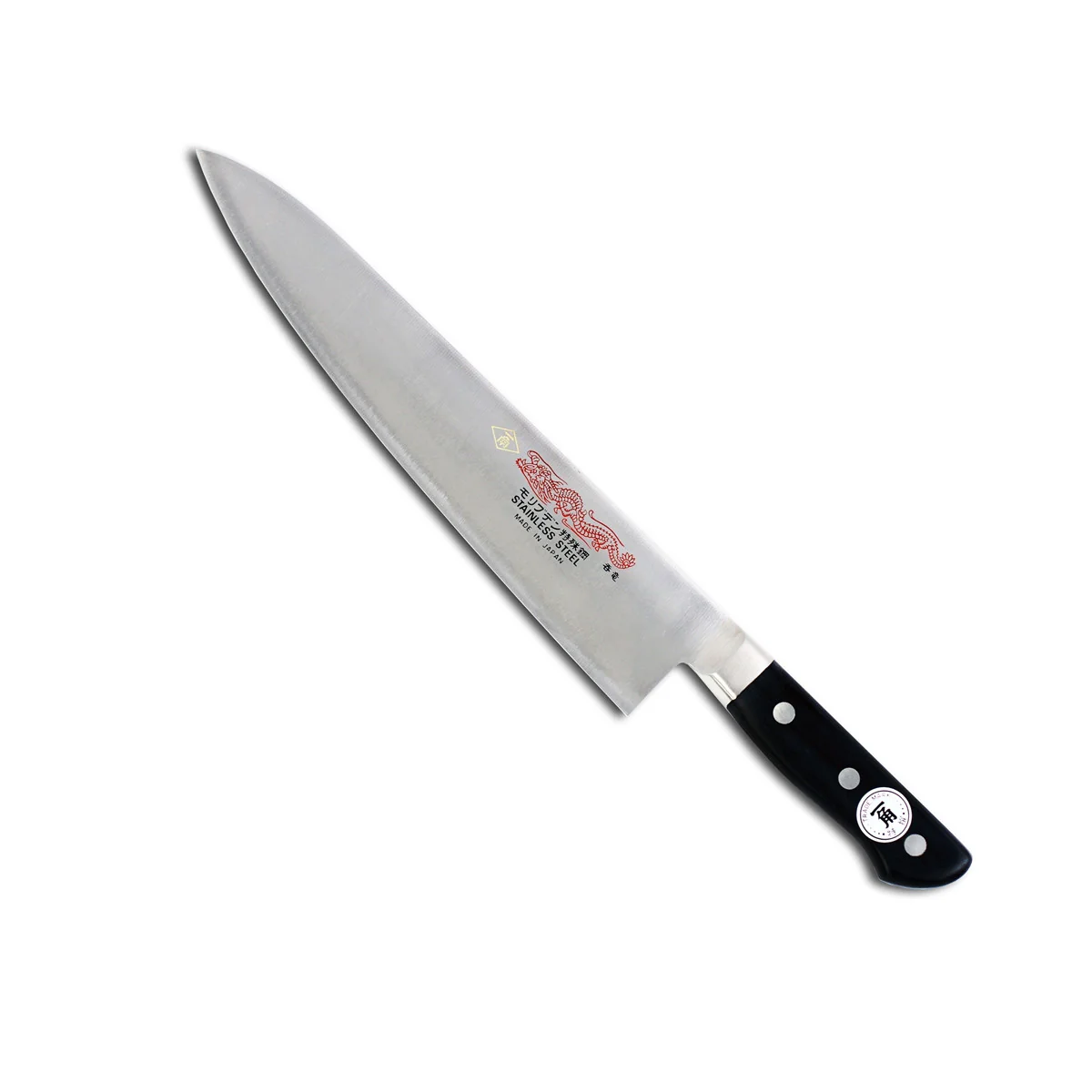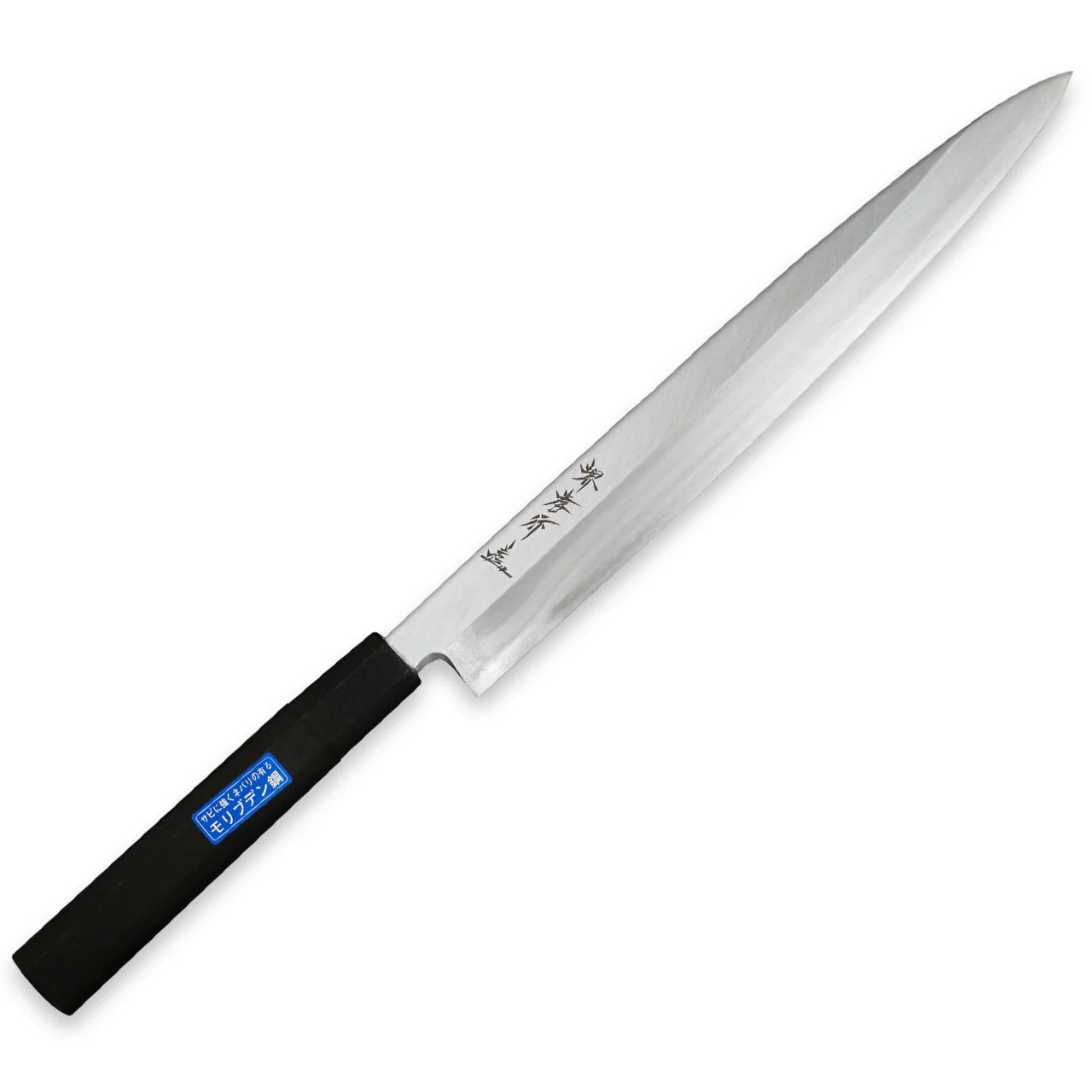
Ishizuchi Blue #2 Nashiji Kiritsuke Gyuto 195mm (7.7")
Specifications
- Brand: Ishizuchi Knife Factory (石鎚刃物)
- Style: Gyuto (Chef Knife)
- Blade Steel Type: Blue #2 Steel clad with Soft Iron
- HRC: 61-64
- Handle Material: Octagonal Walnuts Wood
- Ferrule Material: Yellow Poplar (compressed wood)
- Bevel Angle Ratio: Double Bevel (50/50)
- Blade Length: 195mm (7.7")
- Weight: 6.7 oz (190g)
- Cover: Not included
Precaution
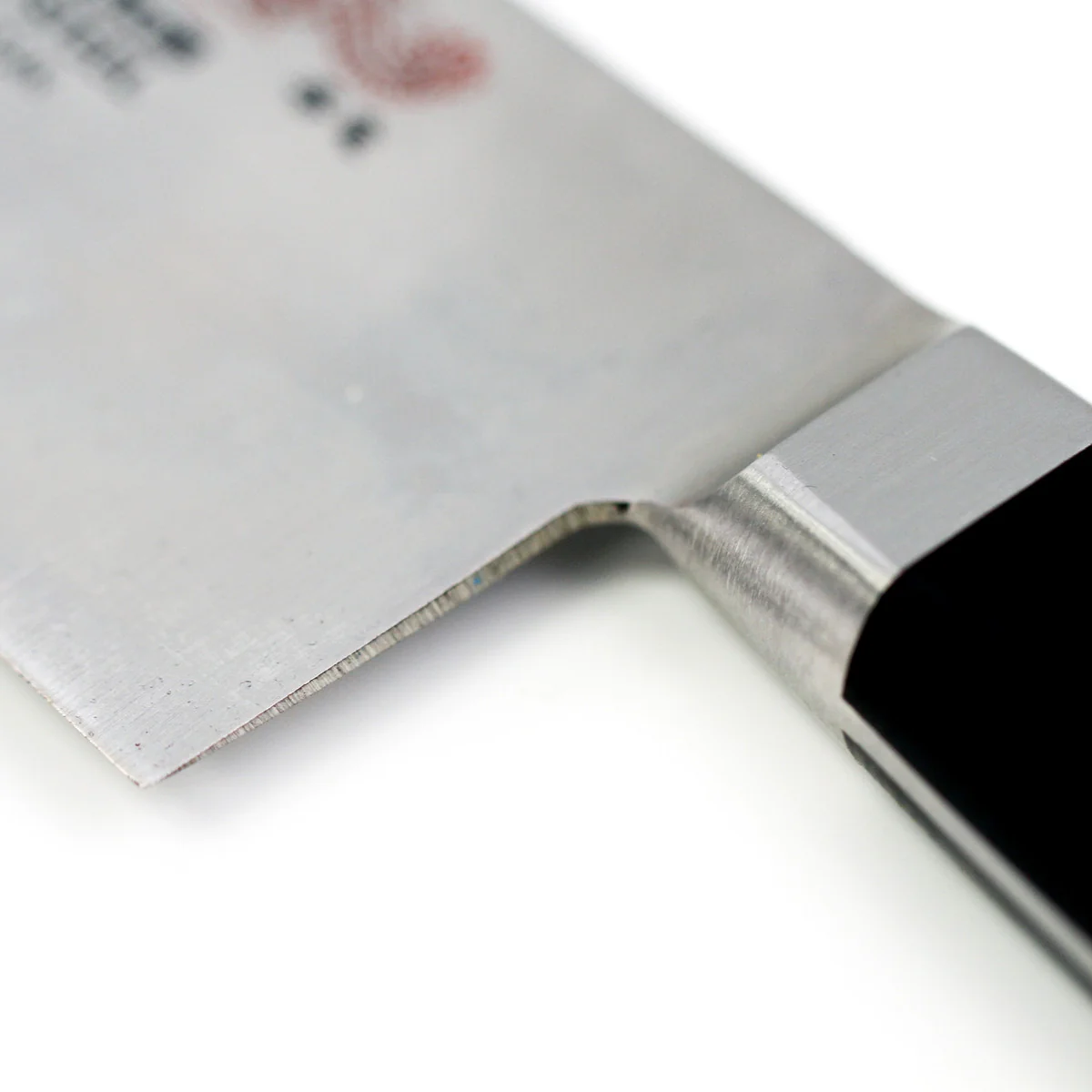
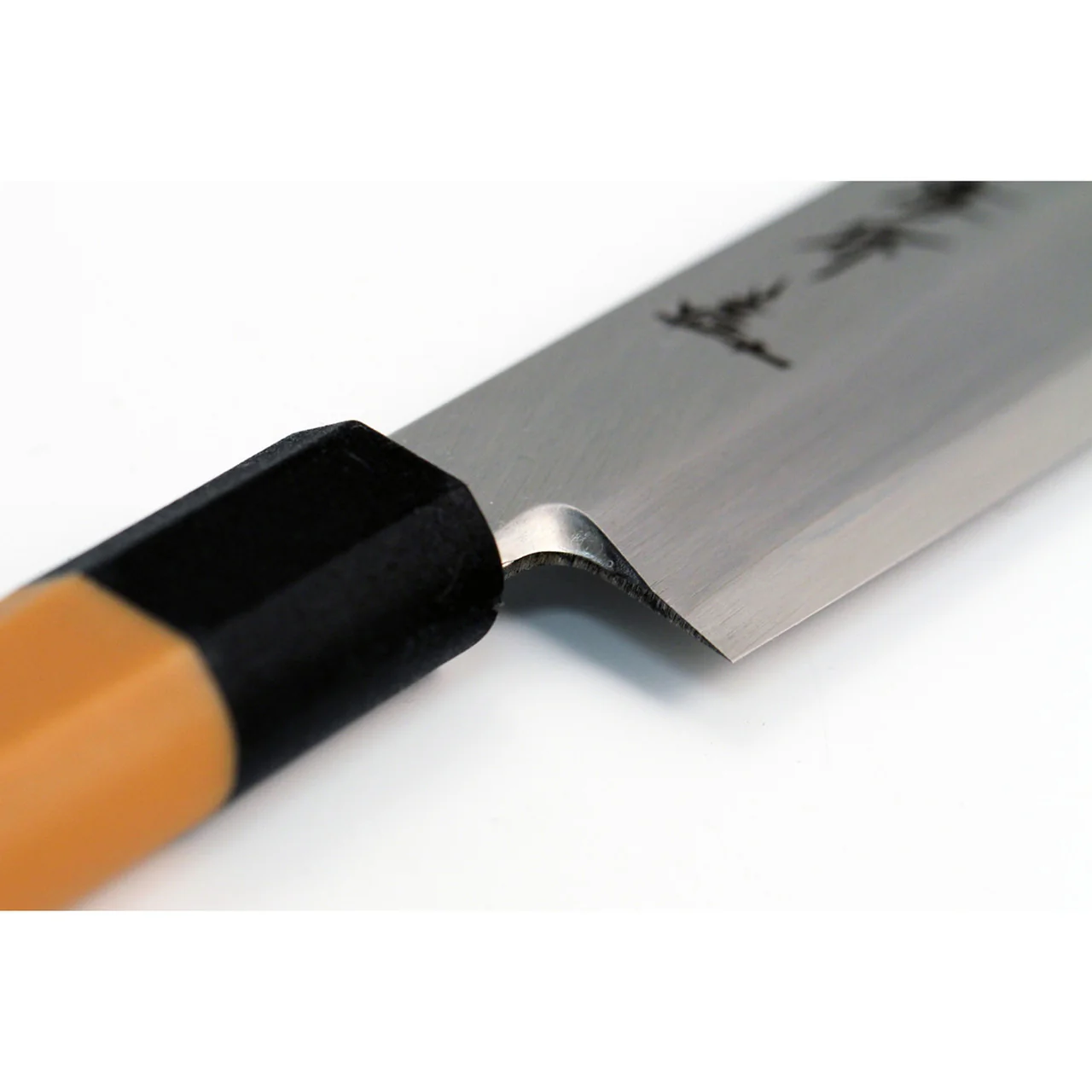
- Tosa Hamono knives have a thicker spine compared to other Japanese knives, so regular Sayas may not fit.
- All Ishizuchi knives are Soft Iron Clad and may rust.
Blue #2 Steel
Each knife is meticulously finished by hand, resulting in subtle differences from one to another, a characteristic feature of Tosa’s "free forging" technique. We hope you enjoy the unique quality of each blade. This knife uses Blue Steel 2, which contains added chromium and tungsten, giving the blade both hardness and toughness, resulting in long-lasting sharpness. The outer layer of the blade is made from Soft Carbon Steel, making it easy to sharpen. The distal taper from the heel to the tip of the blade, combined with the solid construction, provides a good weight that creates a perfect balance in the hand.
Care for Carbon Steel or Carbon Clad Knives
Due to the high carbon content, carbon steel knives, or carbon-clad knives, may develop a natural patina or show discoloration over time. Many chefs appreciate this as part of the knife’s character and history.
These changes are completely harmless and safe for food use. However, if any rust appears due to improper care, we recommend using a rust remover or other cleaning method to prevent it from spreading further.
About Nashiji
The nashi-ji finish gives the blade a subtle, textured surface with a soft matte look. This distinctive pattern adds a refined, handcrafted feel and reduces friction during cutting to allow for smoother, more controlled slices. It is more resistant to rust, ideal for everyday use. The surface texture, resembling the bumpy skin of a pear, creates a unique aesthetic that combines traditional Japanese and modern design.
Ishizuchi Knife Factory
In 1590, warlord Chosokabe Motochika unified Tosa, documenting 399 blacksmiths in the region. Known for its forest-rich environment, Tosa required durable, high-performance tools for forestry, leading to the establishment of specialized blacksmiths. Following this tradition, Kajihira Tomika founded the Ishizuchi Agricultural Tool Company in 1920. Over 100 years later, they continue to maintain the distinctive thick, reassuring spine of Tosa knives while achieving the sharpness expected of fine Japanese knives.
Kengata Kiritsuke Knife
Kiritsuke (difficult to transliterate, but the inherent meaning is pushing and cutting, similar to a sword) is a knife style whose meaning has shifted in recent years. Traditional Kiritsuke are single-bevel knives with a sharp pointed tip that are meant to combine the function of a Usuba and Yanagiba. Recently, it has become common to refer to any knife with a pointed tip of the same shape as a Kiritsuke or K-tip knife, such as Kiritsuke Gyuto or Kiritsuke Yanagiba. As these knives combine the functions of a Usuba and Yanagiba, they are more versatile in a kitchen since only one knife is required. However, that versatility also means the knife is less specialized for each task and is more difficult to use at the same level. In Japan, usually only the executive chef uses a Kiritsuke.
Product Information
Product Information
Shipping & Returns
Shipping & Returns


Ishizuchi Blue #2 Nashiji Kiritsuke Gyuto 195mm (7.7")
Ishizuchi Blue #2 Nashiji Kiritsuke Gyuto 195mm (7.7")
Specifications
- Brand: Ishizuchi Knife Factory (石鎚刃物)
- Style: Gyuto (Chef Knife)
- Blade Steel Type: Blue #2 Steel clad with Soft Iron
- HRC: 61-64
- Handle Material: Octagonal Walnuts Wood
- Ferrule Material: Yellow Poplar (compressed wood)
- Bevel Angle Ratio: Double Bevel (50/50)
- Blade Length: 195mm (7.7")
- Weight: 6.7 oz (190g)
- Cover: Not included
Precaution
- Tosa Hamono knives have a thicker spine compared to other Japanese knives, so regular Sayas may not fit.
- All Ishizuchi knives are Soft Iron Clad and may rust.
Blue #2 Steel
Each knife is meticulously finished by hand, resulting in subtle differences from one to another, a characteristic feature of Tosa’s "free forging" technique. We hope you enjoy the unique quality of each blade. This knife uses Blue Steel 2, which contains added chromium and tungsten, giving the blade both hardness and toughness, resulting in long-lasting sharpness. The outer layer of the blade is made from Soft Carbon Steel, making it easy to sharpen. The distal taper from the heel to the tip of the blade, combined with the solid construction, provides a good weight that creates a perfect balance in the hand.
Care for Carbon Steel or Carbon Clad Knives
Due to the high carbon content, carbon steel knives, or carbon-clad knives, may develop a natural patina or show discoloration over time. Many chefs appreciate this as part of the knife’s character and history.
These changes are completely harmless and safe for food use. However, if any rust appears due to improper care, we recommend using a rust remover or other cleaning method to prevent it from spreading further.
About Nashiji
The nashi-ji finish gives the blade a subtle, textured surface with a soft matte look. This distinctive pattern adds a refined, handcrafted feel and reduces friction during cutting to allow for smoother, more controlled slices. It is more resistant to rust, ideal for everyday use. The surface texture, resembling the bumpy skin of a pear, creates a unique aesthetic that combines traditional Japanese and modern design.
Ishizuchi Knife Factory
In 1590, warlord Chosokabe Motochika unified Tosa, documenting 399 blacksmiths in the region. Known for its forest-rich environment, Tosa required durable, high-performance tools for forestry, leading to the establishment of specialized blacksmiths. Following this tradition, Kajihira Tomika founded the Ishizuchi Agricultural Tool Company in 1920. Over 100 years later, they continue to maintain the distinctive thick, reassuring spine of Tosa knives while achieving the sharpness expected of fine Japanese knives.
Kengata Kiritsuke Knife
Kiritsuke (difficult to transliterate, but the inherent meaning is pushing and cutting, similar to a sword) is a knife style whose meaning has shifted in recent years. Traditional Kiritsuke are single-bevel knives with a sharp pointed tip that are meant to combine the function of a Usuba and Yanagiba. Recently, it has become common to refer to any knife with a pointed tip of the same shape as a Kiritsuke or K-tip knife, such as Kiritsuke Gyuto or Kiritsuke Yanagiba. As these knives combine the functions of a Usuba and Yanagiba, they are more versatile in a kitchen since only one knife is required. However, that versatility also means the knife is less specialized for each task and is more difficult to use at the same level. In Japan, usually only the executive chef uses a Kiritsuke.
Original: $230.00
-65%$230.00
$80.50Product Information
Product Information
Shipping & Returns
Shipping & Returns
Description
Specifications
- Brand: Ishizuchi Knife Factory (石鎚刃物)
- Style: Gyuto (Chef Knife)
- Blade Steel Type: Blue #2 Steel clad with Soft Iron
- HRC: 61-64
- Handle Material: Octagonal Walnuts Wood
- Ferrule Material: Yellow Poplar (compressed wood)
- Bevel Angle Ratio: Double Bevel (50/50)
- Blade Length: 195mm (7.7")
- Weight: 6.7 oz (190g)
- Cover: Not included
Precaution
- Tosa Hamono knives have a thicker spine compared to other Japanese knives, so regular Sayas may not fit.
- All Ishizuchi knives are Soft Iron Clad and may rust.
Blue #2 Steel
Each knife is meticulously finished by hand, resulting in subtle differences from one to another, a characteristic feature of Tosa’s "free forging" technique. We hope you enjoy the unique quality of each blade. This knife uses Blue Steel 2, which contains added chromium and tungsten, giving the blade both hardness and toughness, resulting in long-lasting sharpness. The outer layer of the blade is made from Soft Carbon Steel, making it easy to sharpen. The distal taper from the heel to the tip of the blade, combined with the solid construction, provides a good weight that creates a perfect balance in the hand.
Care for Carbon Steel or Carbon Clad Knives
Due to the high carbon content, carbon steel knives, or carbon-clad knives, may develop a natural patina or show discoloration over time. Many chefs appreciate this as part of the knife’s character and history.
These changes are completely harmless and safe for food use. However, if any rust appears due to improper care, we recommend using a rust remover or other cleaning method to prevent it from spreading further.
About Nashiji
The nashi-ji finish gives the blade a subtle, textured surface with a soft matte look. This distinctive pattern adds a refined, handcrafted feel and reduces friction during cutting to allow for smoother, more controlled slices. It is more resistant to rust, ideal for everyday use. The surface texture, resembling the bumpy skin of a pear, creates a unique aesthetic that combines traditional Japanese and modern design.
Ishizuchi Knife Factory
In 1590, warlord Chosokabe Motochika unified Tosa, documenting 399 blacksmiths in the region. Known for its forest-rich environment, Tosa required durable, high-performance tools for forestry, leading to the establishment of specialized blacksmiths. Following this tradition, Kajihira Tomika founded the Ishizuchi Agricultural Tool Company in 1920. Over 100 years later, they continue to maintain the distinctive thick, reassuring spine of Tosa knives while achieving the sharpness expected of fine Japanese knives.
Kengata Kiritsuke Knife
Kiritsuke (difficult to transliterate, but the inherent meaning is pushing and cutting, similar to a sword) is a knife style whose meaning has shifted in recent years. Traditional Kiritsuke are single-bevel knives with a sharp pointed tip that are meant to combine the function of a Usuba and Yanagiba. Recently, it has become common to refer to any knife with a pointed tip of the same shape as a Kiritsuke or K-tip knife, such as Kiritsuke Gyuto or Kiritsuke Yanagiba. As these knives combine the functions of a Usuba and Yanagiba, they are more versatile in a kitchen since only one knife is required. However, that versatility also means the knife is less specialized for each task and is more difficult to use at the same level. In Japan, usually only the executive chef uses a Kiritsuke.